
Soil preparation
The plots where the planting and cultivation of medicinal and aromatic plants are planned must be of good quality, with medium to high levels of nutrients. Priority is given to plots that are loose, well-ventilated and drained, as well as have sufficient moisture. One-year-old medicinal plants yield satisfactory yields even on less than high-quality soils, despite attempts to improve the soil structure and texture each time. The agrotechnical measures that must be carried out on the plot to successfully cultivate medicinal and aromatic plants are:
- Cell - basic working, at a depth of (30-50) cm.
- Displacement – dislocation, (20-25) cm.
- Disking, tilling, as well as cultivation, these measures are carried out before sowing the seed or planting the seedling with the aim of loosening, partial turning, soil mixing, as well as cutting weeds.
During soil preparation, the use of well-mineralized manure in approximate amounts of 30-40 T/ha is recommended.
Planting of MAPs
Medicinal and aromatic plants can propagate generatively (by seed), as well as vegetatively (by above-ground or underground parts of the plant). Nursery material used for planting, whether seed or seedling, must have:
- High quality, which would positively influence the germination or growth of the seedling respectively.
- Planting material must be sourced from licensed producers.
- The seedling material must be accompanied by documentation proving its quality and origin.
- Nursery material must be certified as organic nursery material.
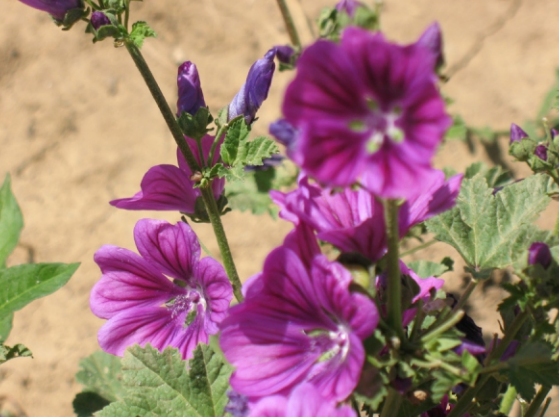
Black mallow (alva sylvestris)
Sowing is done directly with seeds and transplanted seedlings. Seeds are sown from mid-April at planting distances (80x35) cm. The seed rate for planting is 5-6 kg/ha. If planting is done with seedlings, then from 1 gram of seed, 300 seedlings are produced and transplanted in the months of April-May.
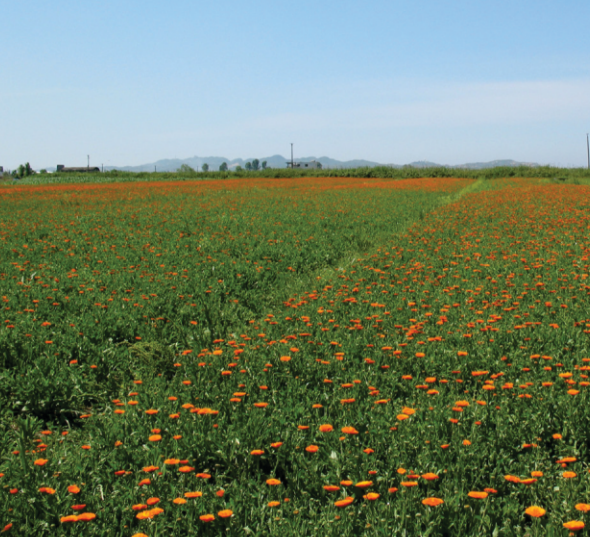
Calendula (Calendula officinalis)
The planting of the Kalendula crop is done directly by seed, from the beginning until mid-April, with planting distances between rows of 80 cm. The planting rate is 5-7 kg/ha. The seed is sown at a depth of 1-2 cm and germinates in 10-15 days. The distance between plants is about 25 cm.
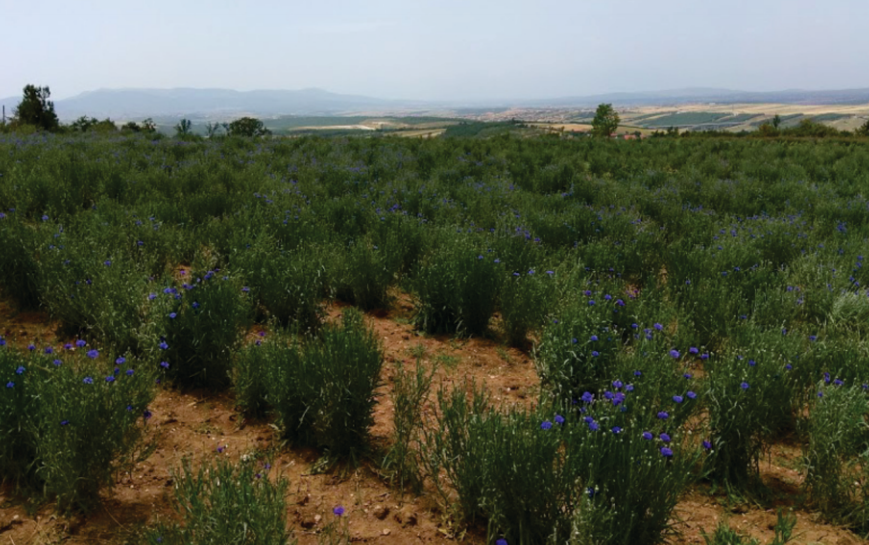
Cyan (Centaurea cyanum)
If the agricultural crop Ciani is planted directly by seed, then sowing is done in the months of March-April in rows spaced 80 cm apart. The temperatures for seed germination are 20-30 °C, with a time period of 3-4 weeks. If planting is done with seedlings, then 100 seedlings are taken per 1 gram; planting is done at the end of March and the beginning of April. The distance between plants is about 25 cm.
Medicinal sunflower (Helianthus annuus)
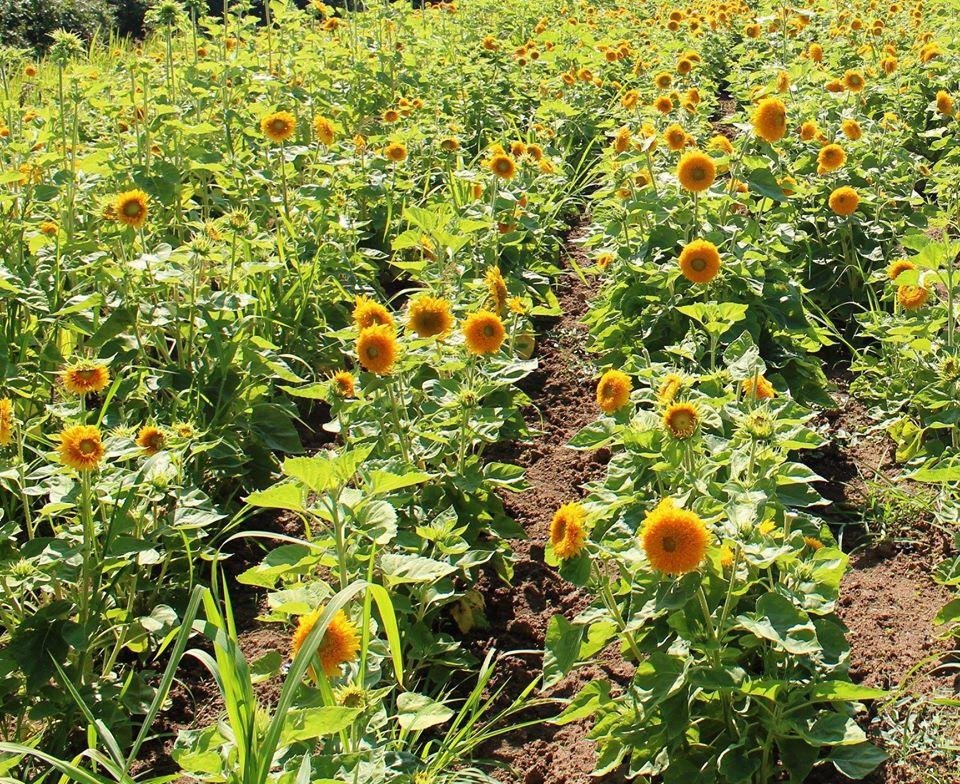
Sowing is done directly by seed in the cultivated plot—the plot where the sunflower agricultural crop is planned to be cultivated. It is planted in April at planting distances (80x30 cm). Germination temperatures have a wide range. The optimal development temperatures are 20-25 °C. The seed rate for planting is 4-6 kg/ha. It is planted at a depth of 5-8 cm.
Chamomile (Matricaria chamomille)
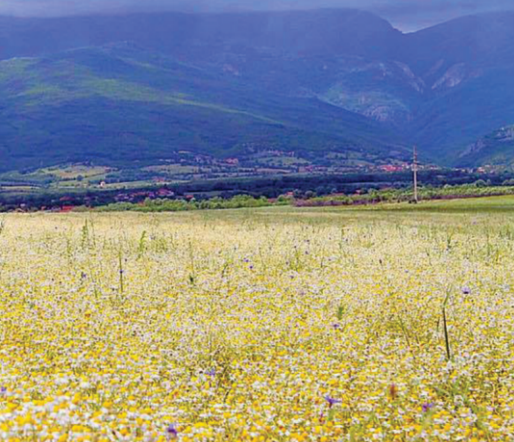
Chamomile is a wintering plant and is sown directly by seed in August-November depending on the climate. The planting rate per hectare is 1-3 kg. For planting, 3-4 kg of chamomile flour is used in a ratio of 20-25% seed and 75-80% dried flower disc. The seed is not covered; the soil is well compacted after planting, and germination occurs within 6-8 days. Sowing is done with special grain planters.
For questions and clarifications, you can contact colleagues from IADK:
Halit Gashi - Agricultural Engineer. +383 49 633 321
Leart Kamberi - Agricultural Engineer. + 383 49 904 917
Available in: SHQ, ENG, SRB